


Prenatal Massage Safety Guide for a Serene Stay
A holiday on Virgin Gorda can be a welcome pause during pregnancy: warm sea air, slower mornings and time to rest properly. This prenatal massage safety guide is designed to help you enjoy that pause with confidence, knowing when a treatment may be appropriate, what thoughtful care should look like, and when your midwife or doctor should advise first.
Pregnancy massage is not simply a regular massage with a few cushions added. Your comfort, stage of pregnancy, health history and how you feel that day all shape the treatment. The most luxurious experience is one that feels unhurried, carefully adapted and entirely centred on your wellbeing.
When prenatal massage may be suitable
For many people with an uncomplicated pregnancy, a gentle prenatal massage can be a calming way to ease common discomforts such as muscular tension, tired legs, an aching lower back and the mental load that can accompany pregnancy. It can also create a rare pocket of quiet - particularly welcome while travelling, settling into a villa or enjoying time aboard a yacht.
Many spas and practitioners prefer to offer prenatal massage after the first trimester. This is often a cautious service policy rather than a judgement that massage causes problems in early pregnancy. Evidence does not establish massage as a cause of miscarriage, but the first trimester is a sensitive and uncertain time for many expectant parents. Individual medical guidance should always take priority.
Before booking, consider how you have been feeling and whether your pregnancy has been straightforward. Tell the spa how many weeks pregnant you are, whether you have any current symptoms, and whether your clinician has given you specific advice about activity, positioning or treatments. A professional therapist will welcome this conversation. It is the foundation of a personalised service, not an obstacle to relaxation.
Speak to your clinician before booking if needed
There are times when a massage should wait until you have spoken with your midwife, obstetrician or doctor. This is especially true if you have been advised that your pregnancy is high risk or you are being monitored more closely than usual.
Seek medical guidance before arranging treatment if you have high blood pressure or pre-eclampsia, gestational diabetes that is not well controlled, a history or risk of blood clots, placenta praevia, cervical concerns, recurrent pregnancy loss, severe swelling, or a multiple pregnancy. The same care applies if you are taking medication that affects circulation or clotting.
Do not attend for a massage if you have vaginal bleeding, leaking fluid, regular or painful contractions, severe headache, visual disturbance, chest pain, shortness of breath, fever, sudden swelling of the face or hands, or pain, heat and swelling in one calf or leg. These symptoms need prompt medical assessment rather than spa care.
Travel can add another layer of consideration. If you have recently flown, spent long periods sitting, or been moving between islands by boat, let your therapist know. A treatment may still be suitable, but any new one-sided leg discomfort, unexplained swelling or breathlessness should be assessed medically first.
What safe prenatal massage looks like
A considered prenatal treatment begins with consultation. Your therapist should ask about your due date, pregnancy history, current discomforts, allergies, medical conditions and any advice from your care team. They should explain how you will be positioned and invite you to speak up at any point.
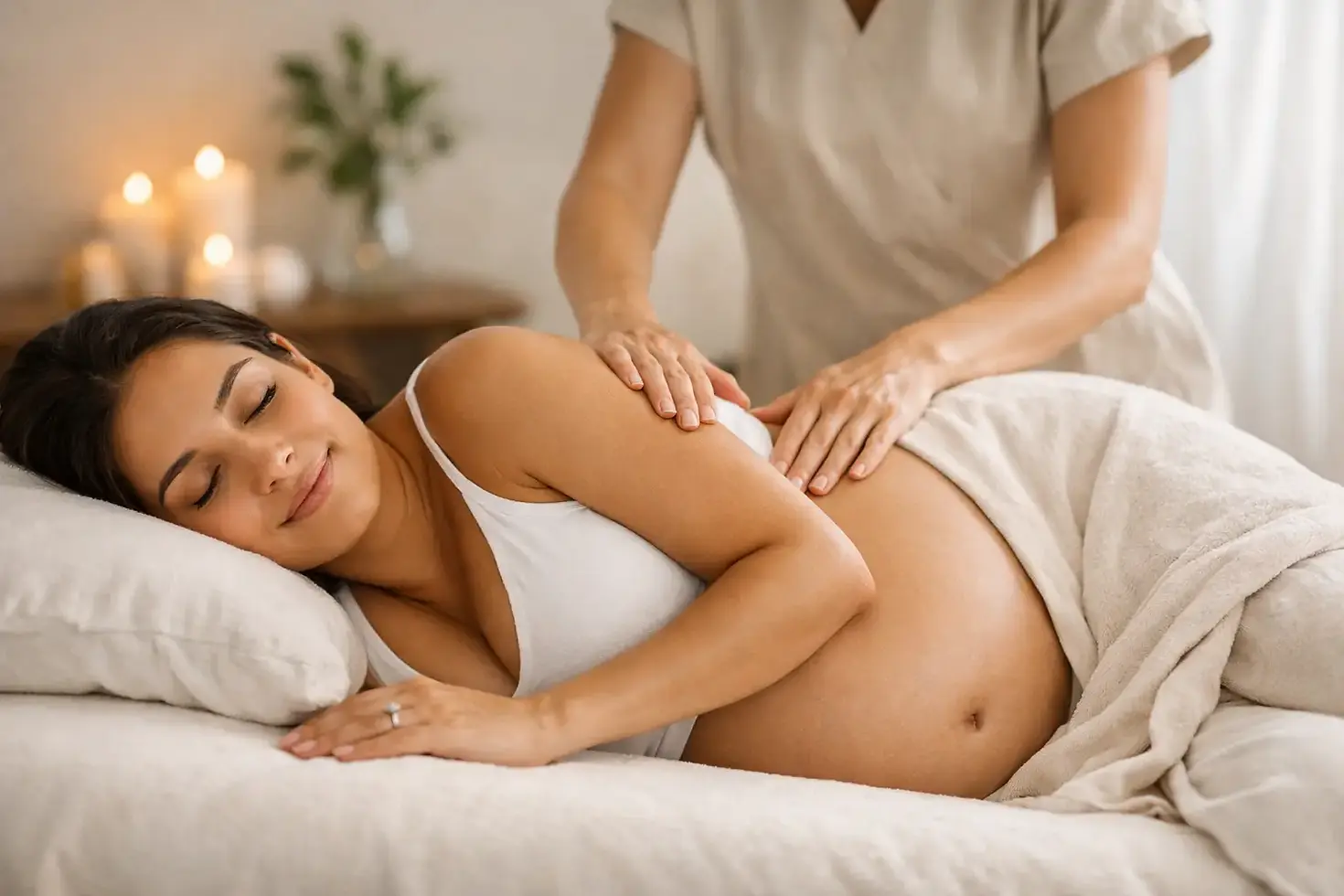
After the first trimester, side-lying is often the most comfortable position. Supportive pillows can cradle the bump, place the hips at ease and reduce strain through the shoulders and lower back. Some clients may be comfortable in a carefully supported semi-reclined position for part of the treatment, but lying flat on the back for an extended period is generally avoided later in pregnancy because the weight of the uterus can affect blood flow and cause dizziness or nausea.
Pressure should be soothing and responsive, not a test of endurance. Gentle to moderate work on the back, shoulders, hips, hands and feet may offer welcome relief. The abdomen is typically avoided unless a therapist has specific training and the client has clearly agreed to carefully adapted touch. Deep, forceful work over the legs is not appropriate where there is any concern about circulation or clot risk.
A trained therapist will also avoid prolonged pressure on sensitive areas and will not make promises about inducing labour, changing a baby’s position or treating medical conditions. Massage can support comfort and calm. It is not a replacement for antenatal care.
Comfort is useful information
Pregnancy changes quickly. What felt perfect last week may not suit you today. Nausea, heartburn, heat sensitivity, pelvic discomfort and fatigue can all influence your experience, especially in a tropical setting.
Ask for a cooler room, extra cushions, a shorter session, a break for water or a different position if you need it. If you feel light-headed, breathless, uncomfortable, emotionally overwhelmed or simply not at ease, say so immediately. A graceful treatment is one in which you never have to push through discomfort to be polite.
Oils, aromas and treatment choices
Luxury should never mean unnecessary complexity. During pregnancy, a simple, unscented massage medium is often the most comfortable choice, particularly if scent sensitivity or nausea is present. If aromatherapy is offered, ask exactly which oils are being used and whether they have been selected for prenatal use. Your therapist should be able to adapt or omit fragrance without compromising the quality of the experience.
Warm stones, intense heat, hot wraps, saunas, steam rooms and very hot baths require extra caution in pregnancy because overheating is not desirable. Likewise, strong exfoliation, body contouring treatments and services involving electrical stimulation may not be appropriate. If a treatment menu is unclear, ask for a pregnancy-specific recommendation rather than trying to adapt a treatment yourself.
At The Lotus Centre Spa, the most suitable prenatal experience should feel quietly tailored: considered pressure, supportive positioning and time set aside for an unhurried consultation. Whether you are visiting the spa or arranging private care at your villa, clear communication beforehand helps create the serene, restorative experience you came away to find.
Choosing the right therapist in Virgin Gorda
A beautiful setting matters, but credentials and attentiveness matter more. Look for a licensed massage therapist who has completed recognised prenatal or perinatal massage training and who is comfortable discussing contraindications. A good practitioner will not minimise your concerns, rush past your health information or insist that a particular treatment is right for everyone.
When making an enquiry, ask whether the therapist regularly works with pregnant clients, how they position clients after the first trimester, and whether they can adapt pressure, duration and products. These are practical questions, not demanding ones. They signal that you value thoughtful care.
For an outcall massage in a villa or on a yacht, confirm that there is a stable, comfortable space for the treatment and enough room for side-lying positioning with bolsters and pillows. Sea movement, heat and limited space may mean a shorter or more gently paced service is the wiser choice. Privacy and convenience are wonderful additions, but they should not come at the expense of proper set-up or comfort.
Preparing for a more restorative appointment
Choose a time when you do not need to rush straight to dinner, a boat departure or an excursion. Have a light meal beforehand if that suits you, arrive hydrated, and wear comfortable clothing. If you are prone to nausea, keep the pre-treatment routine simple and mention it during consultation.
Bring any guidance you have received from your clinician, especially if you have a condition that requires modification. You do not need to provide a detailed medical file, but relevant information allows your therapist to make good decisions. If you are unsure whether to book a full treatment, a shorter session may be a lovely way to see how your body responds.
Afterwards, give yourself permission to remain in the slower rhythm. Drink water, rise gradually from the treatment bed and avoid planning anything physically demanding immediately afterwards. Massage may leave you feeling deeply relaxed, and a little extra rest can be part of its pleasure.
Pregnancy deserves care that feels both indulgent and sensible. With medical guidance where needed, a properly trained therapist and a treatment shaped around your comfort, massage can become a gentle part of your island stay - a quiet hour to soften, breathe and return to yourself.


Comments